SAAB GRIPEN

SAAB/Gripen International JAS39A Gripen (Gryphon) 7 Wing, Swedish Air Force, 2000.
Airfix repackage Italeri's nicely detailed Gripen kit, albeit with less weaponry. Decals are quite good though, giving the (comparatively) colourful early scheme.
Sweden's commitment to neutrality is clearly evidenced by their determination to
develop indigenous combat aircraft. The Gripen was the first of the current fighter
generation to become operational and has established itself as the front running
F-

Like its predecessor, the Gripen is designed to fly from austere facilites (e.g. roads and dispersed operating bases) and with minimal support, which makes it an ideal candidate for modern expeditionary warfare.
Although not widely publicised, the aircraft had significant British design input,
particularly in wing design, that can be traced back to 1970s Hawker designs for
advanced combat aircraft. Its radar system is also based on the SELEX (ex-

SAAB JAS39B Gripen (Gryphon), UK MoD Empire Test Pilot School, 2006.
Italeri's 2-

Since 1999, leased Gripens have been used by the QinetiQ-

Although normally operating from SAAB's facility at Linkoping in Sweden, a specially marked ETPS Gripen is regularly seen at UK shows, and it was in this guise that it appeared at the 2006 Farnborough Air Show, complete with blue fin and spine, ETPS badge and QinetiQ titles on the forward fuselage. The blue trim and badge remain, but the QinetiQ titles apparently annoyed the Swedish Air Force and were quickly removed.

SAAB JAS39C Gripen (Gryphon), F7 Wing Swedish Air Force, Satenas, 2012.
The standard Italeri single-
The JAS39C variant of the Gripen adds a more powerful engine, air to air refuelling
capability and improved NATO weapons compatability via a Mil-

With a new colour glass cockpit, the JAS39C retains all the air to air capability
of the JAS39A, but provides additional air to ground capabilities and new weapons
systems including the KEPD350 Taurus cruise missile. Similar to the UK-

As well as new build aircraft, many existing JAS39A aircraft have now been converted
to C standard. Gripens now also carry the latest IRIS-

Friends & Allies -
F3 Wing, Malmen (Linkoping), Royal Swedish Air Force, 1963
I have always thought the barrel shaped Tunnan looked impressively pugnacious, so acquired this kit to add to my Gripens and Viggens. As is normal for Matchbox, the panel lines are very deep and detail rather crude, but buildability and fit are good.
The Saab J-
The Tunnan's early crash record was poor, due to the advanced and demanding nature
of the jet engines and swept wings. As a result the Swedish Air Force purchased twin
seat De Havilland Vampire T.11s to train their J-

Swedish Tunnans saw combat service in the Congo from 1961 to 1964, flying ground
attack missions in support of the UN peacekeeping forces. The aircraft were rated
very highly by those who saw them, with their performance and availability at least
the match of any of the aircraft fielded by the major powers. The final F variant
of the J-


The Boeing Vertol 107 design was selected by the US Marines in early 1961 as the
CH-
In Swedish service, the aircraft is known as the HKP-



The Swedish Air Force (Svenska Flygvapnet) first stood up as an independent force in 1926, combining aircraft from the Swedish Navy and Army. Steadfastly neutral for the first 99 years of its existence, Sweden became a full member of NATO in 2025 in the face of increasing Russian threats and aggression.
July 2026 marked the celebration of its 100th year in existence.
Since the end of the 2nd World War, the Swedes have maintained a highly capable and advanced force, mainly based around indigenous (and often highly innovative) designs from Saab, that have been optimised for Sweden’s needs.
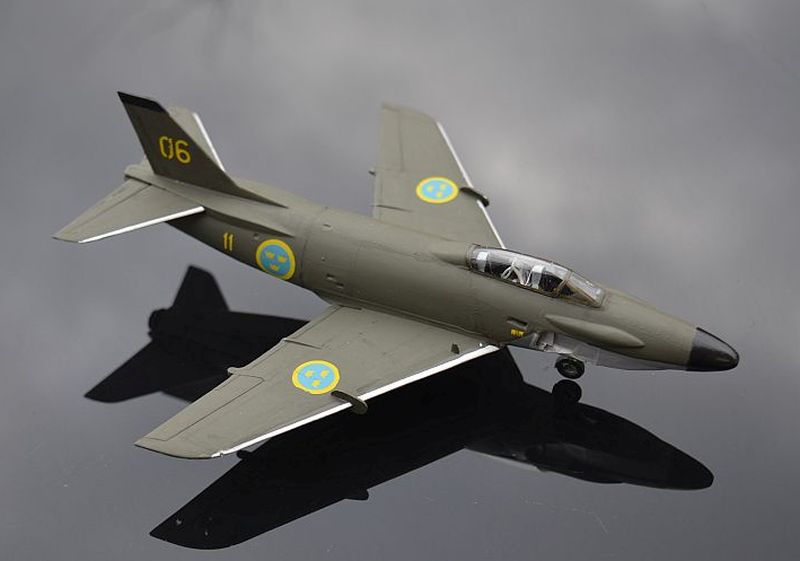
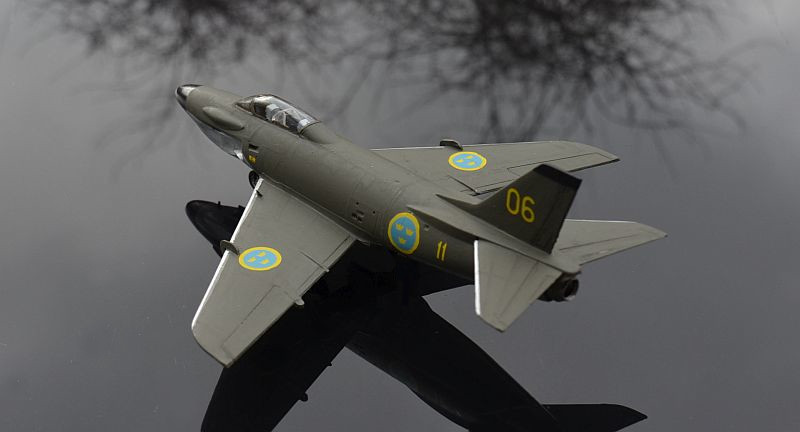
Södermanlands Flygflottilj 11, Nyköping -
Heller 1/72
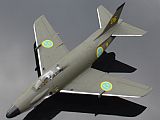
The Saab 32 Lansen (Lance) was a highly successful and advanced post WW2 Swedish
aircraft that entered service with the Flygvapnet in 1960, continuing in some specialised
roles until the 1990s. Its design drew heavily on WW2 Nazi research that was retrieved
by Sweden via Switzerland in 1945, specifically Messerschmitt's P11xx series of projects,
clearly reflected in some of its design features (even its original project name
-
The Saab design team included a brace of former Messerschmitt engineers, led by aerodynamic
designer Hermann Behrbohm who had worked with the Lippisch brothers on tailless delta
wings, on the Me-
Like many early jet designs, the Lansen was difficult to fly and suffered a high rate of attrition, with nearly 30% lost in accidents, resulting in the death of 100 crew and 7 civilians. One of its intended roles was as a Tactical Strike aircraft, with design closely linked to the Swedish Tactical Nuclear Weapons programme (which was eventually cancelled, with funds diverted to the J37 Viggen project).
Three main variants were produced: the original A-
Lansens were capable of supersonic flight in a shallow dive and were powered by a
licence-
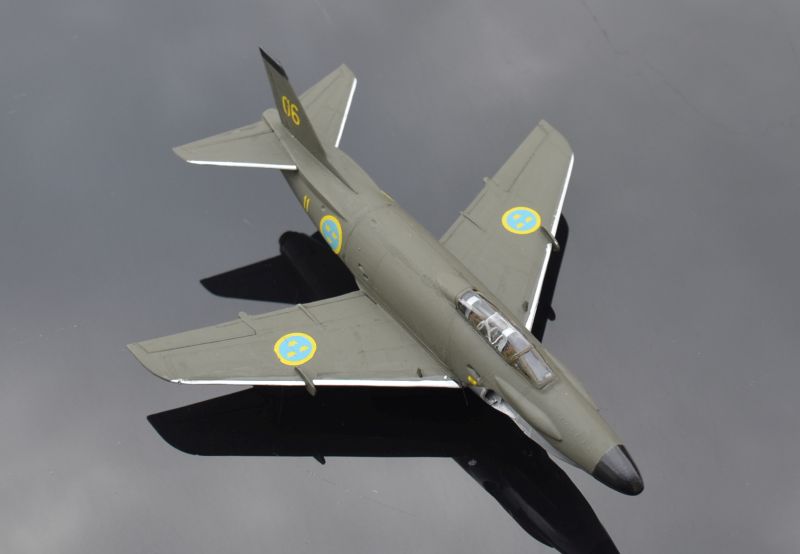
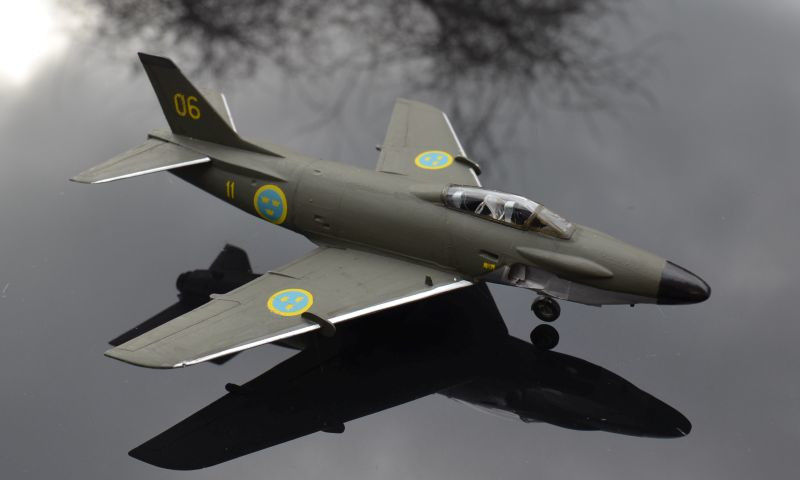
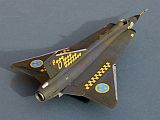
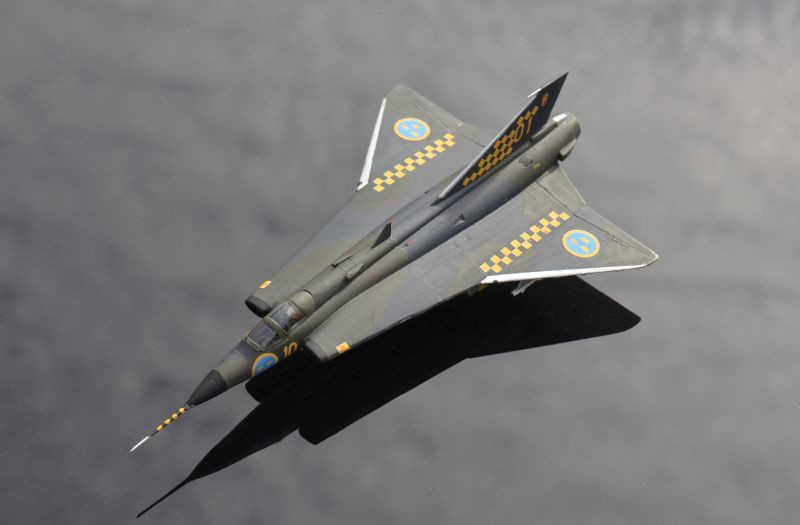
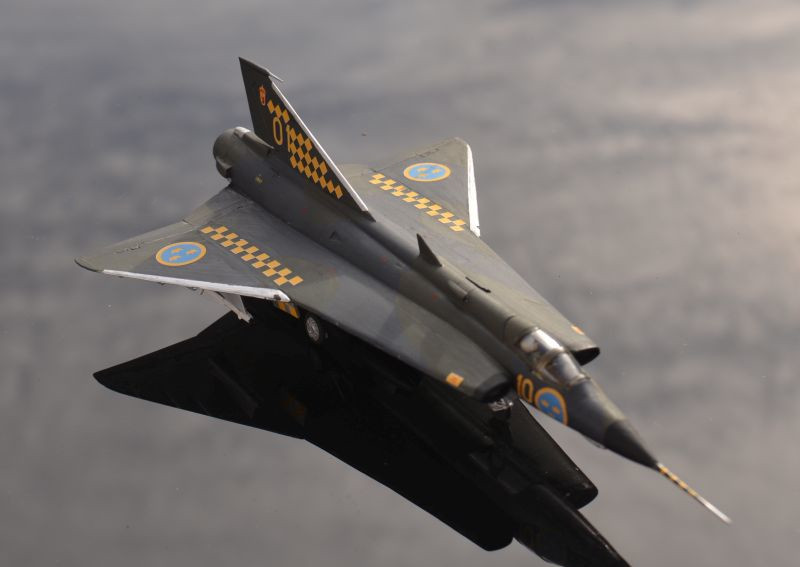
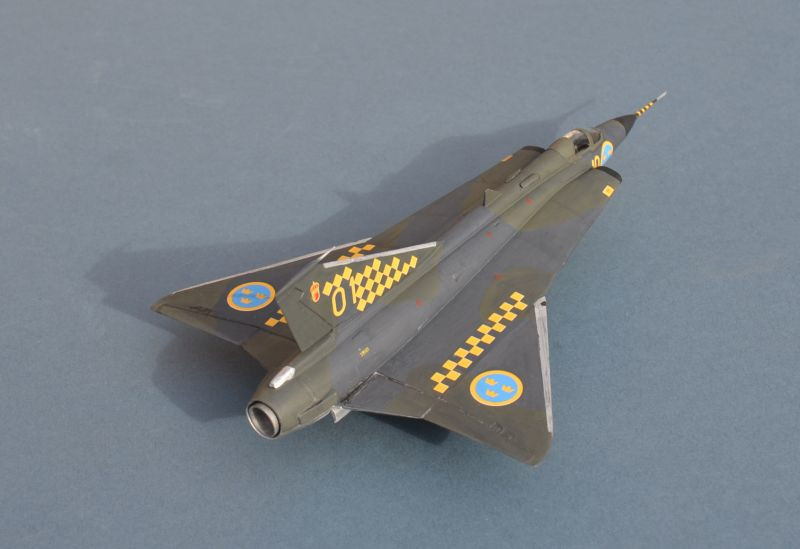
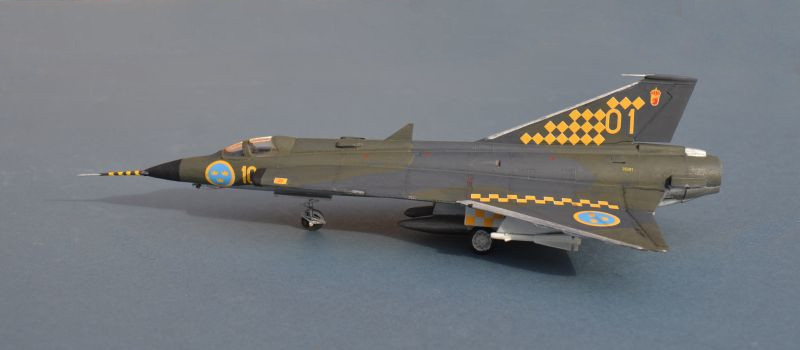
The Saab J-
The Draken was designed as a very fast air defence interceptor, intended to face
high flying Soviet bombers as they crossed the Baltic sea. Its revolutionary double
delta wing was adopted to overcome CofG issues with a pure delta. Powered (like
the Lansen) by a locally built licensed Rolls Royce Avon (the RM6) fitted with a
Swedish-
Armament normally consisted of one or two 30mm Aden Canon (depending on variant),
unguided rockets and the Rb28/27 Falcon (AIM-
Drakens first entered service in 1959, with the last operational flight in 1999. Link to Build Page
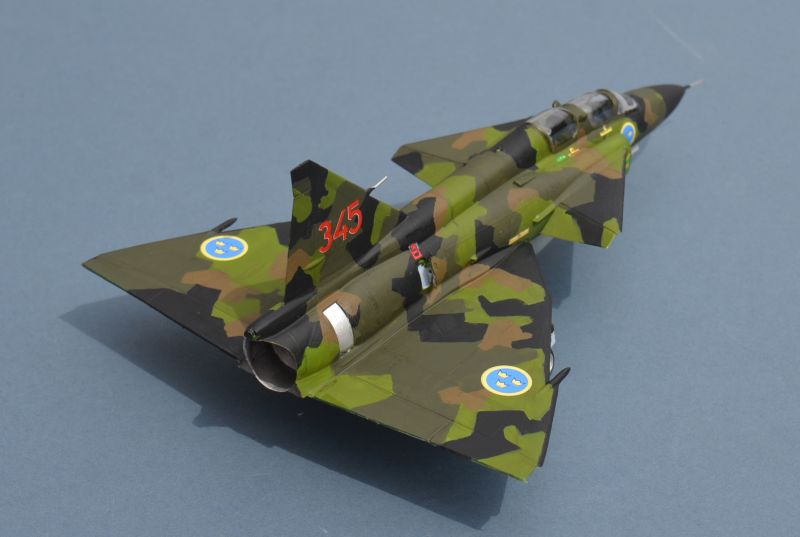
SAAB VIGGEN
2nd Prototype/development aircraft
As is often the case with kit manufacturers, in their rush to sell a Viggen kit, Airfix produced the prototype, which is very different from the later production versions. Although it looks the part, it is a rather crude kit, which doesn't fit together all that well.
"Viggen" is apparently a play on words -
Designed as a multi-


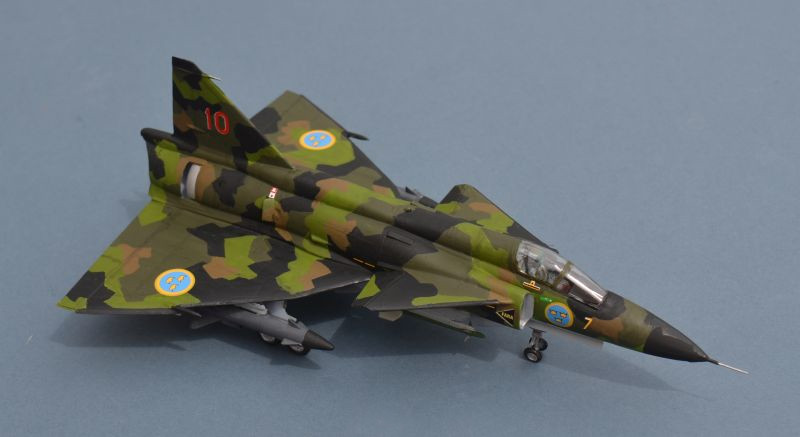
"Flygflottilj 7, Skaraborg Wing, Såtenäs Air Base, 1980
Heller 1/72
Four main variants were produced, the AJ-
ggens entered service in 1971 and remained until 2005 when finally replaced by the
Gripen. Armament included Skyflash, and AMRAAM BVR missiles, Sidewinder, rocket
pods or bombs, RB04 and RBS-
Viggens saw no export success, with the only real prospect (India) being blocked by the US (thus encouraging the Indians to buy British and Russian aircraft instead). Link to build page
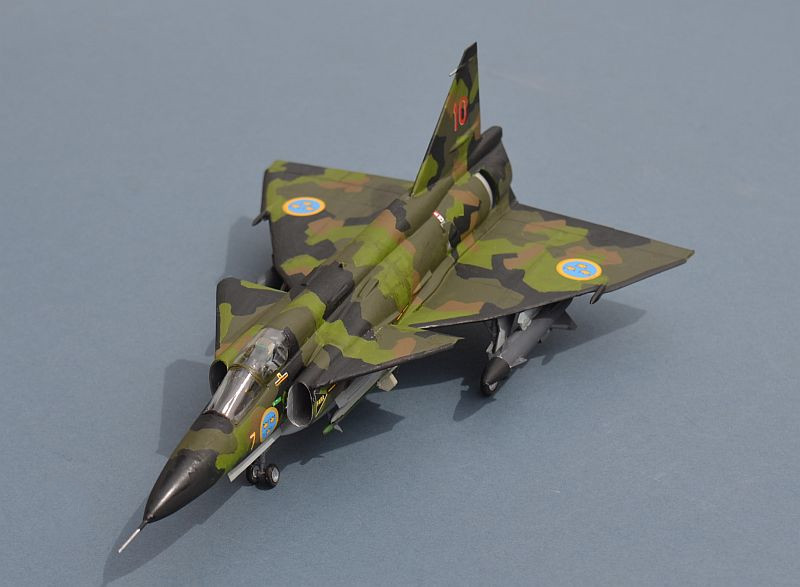
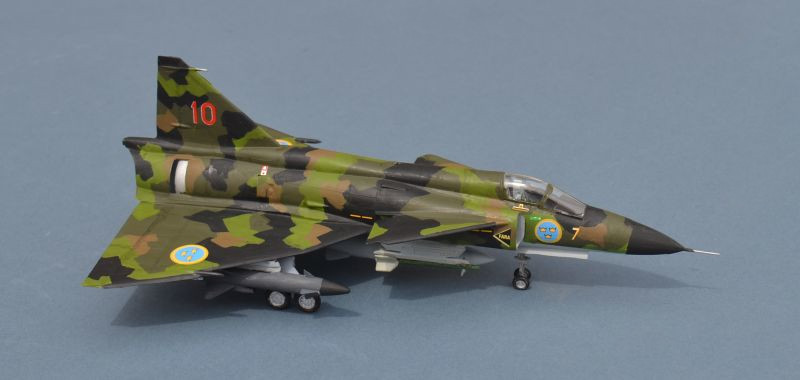
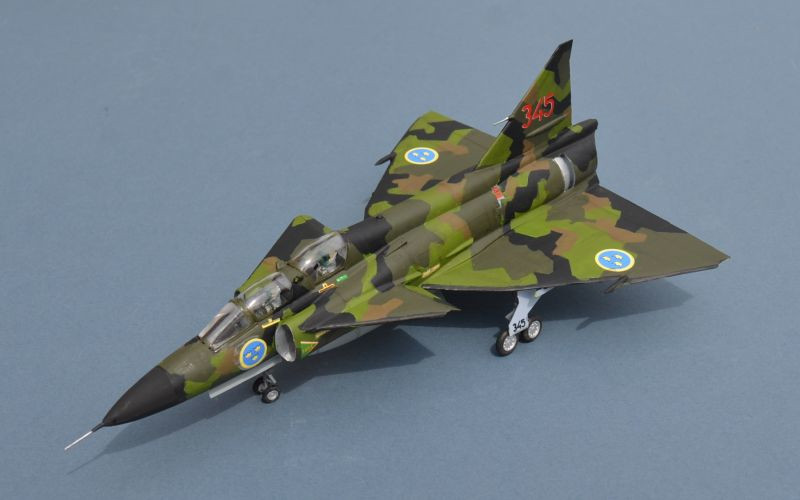
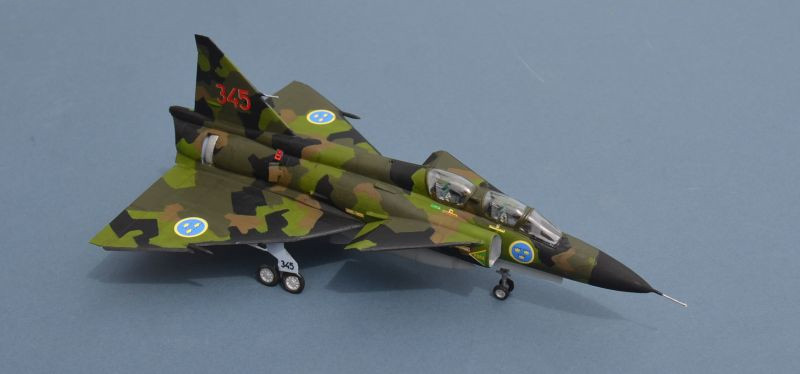
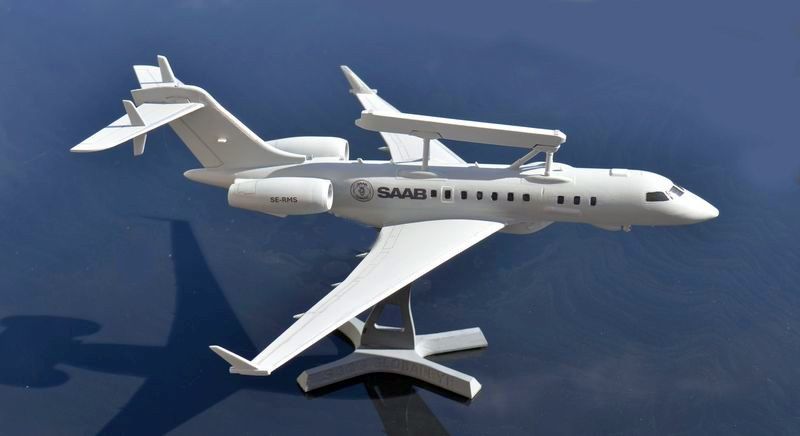
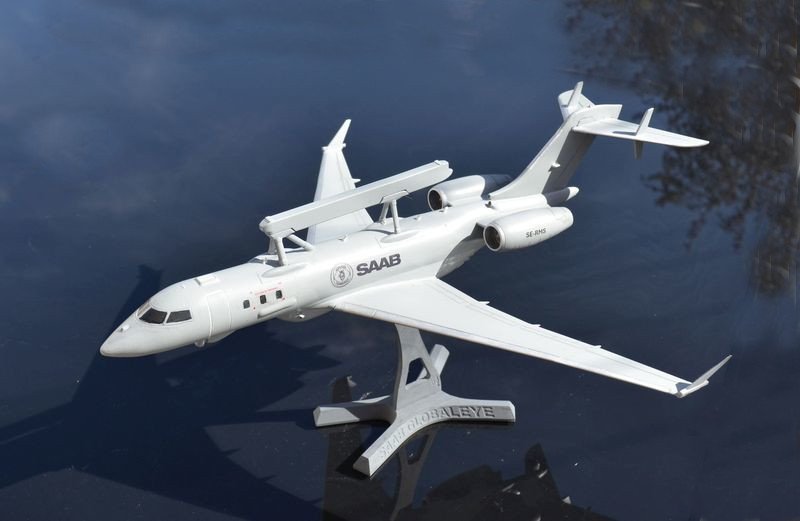
Company Demonstrator, RIAT, 2023
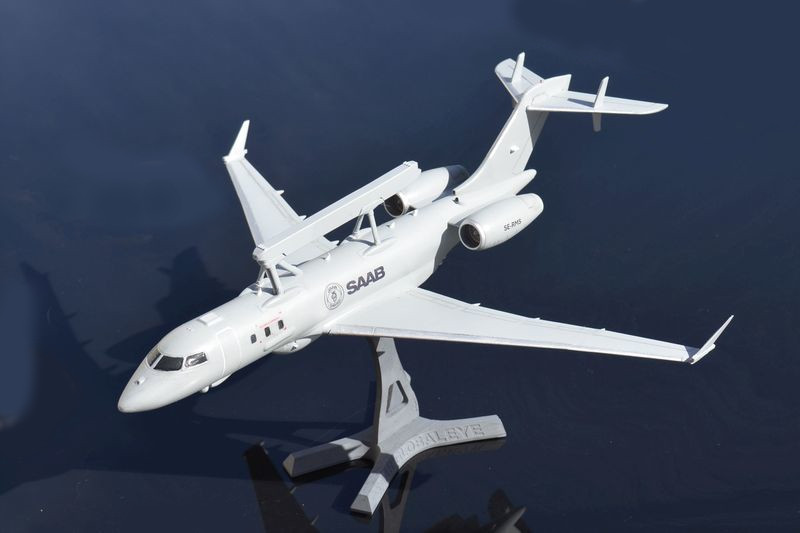
3d printed Files from 3D_araujo 1/72
GlobalEye is based on the highly successful Bombardier 6000 series business jet,
built in Toronto, Canada. Basic airframes are delivered to SAAB in Linkoping, Sweden
for conversion into AEW platforms by adding SAAB's EriEye AESA radar in a canoe fairing
above the cabin. A British-
GlobalEye carries a much smaller crew than the E-
Globaleye is already in service with Sweden and the UAE, with the latter using them extensively during the ongoing Iran conflict to track drones, ballistic missiles and sea surface traffic in the Gulf. A further Gulf customer has placed an order, with NATO, France and the Netherlands expected to order theirs soon. It has also been selected by South Korea and Canada continues to give it serious consideration. Link to build page
© www.gengriz.co.uk