April 2026 -
Link to Website Index: 
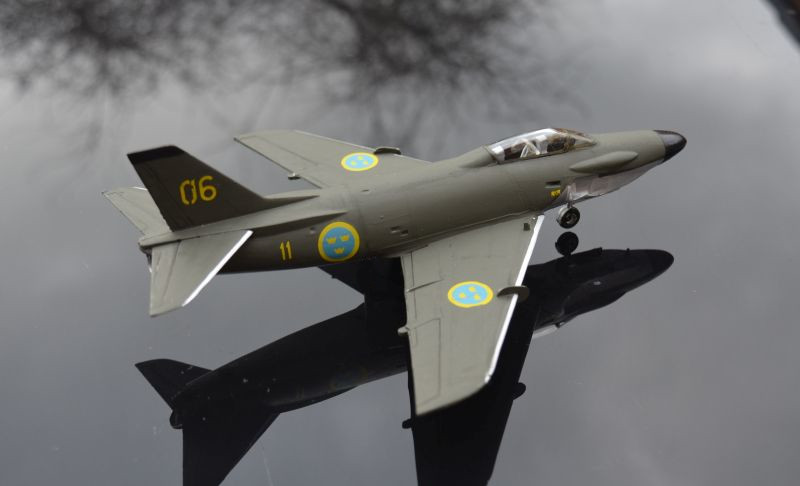
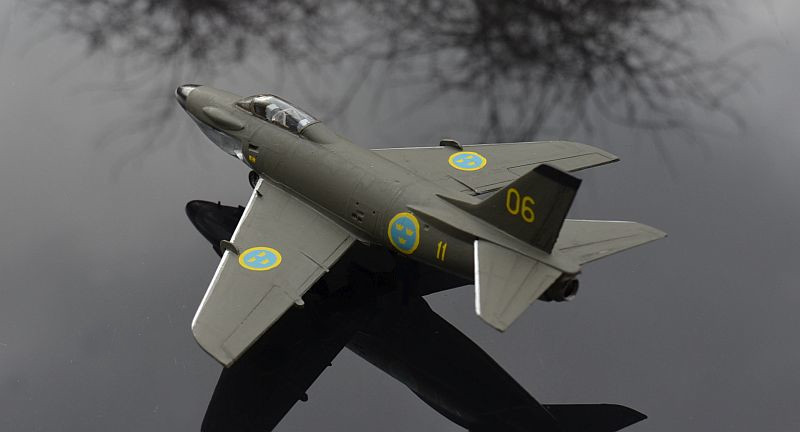
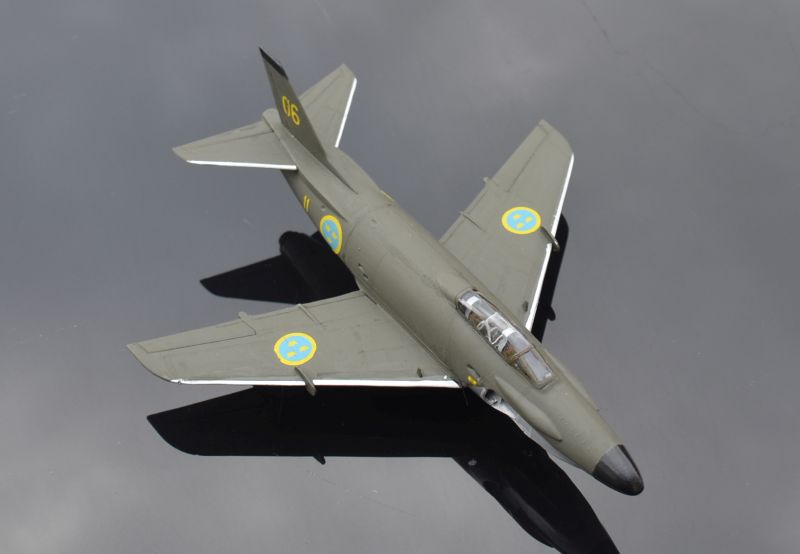
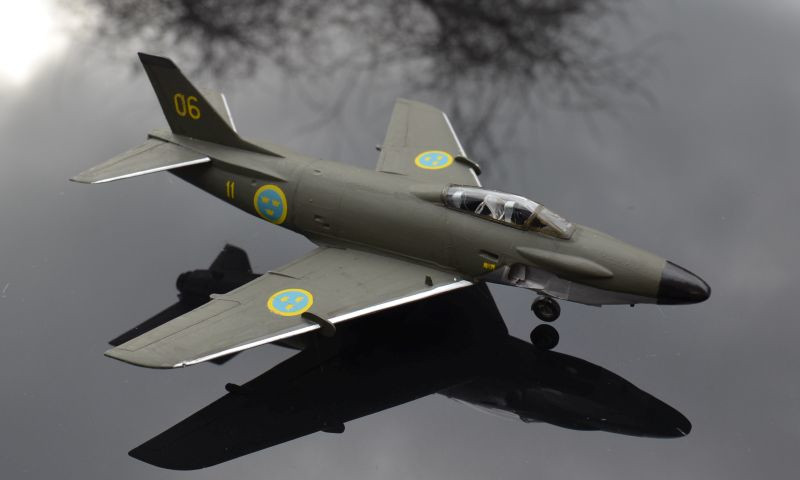
Saab S-
Södermanlands Flygflottilj 11, Nyköping -
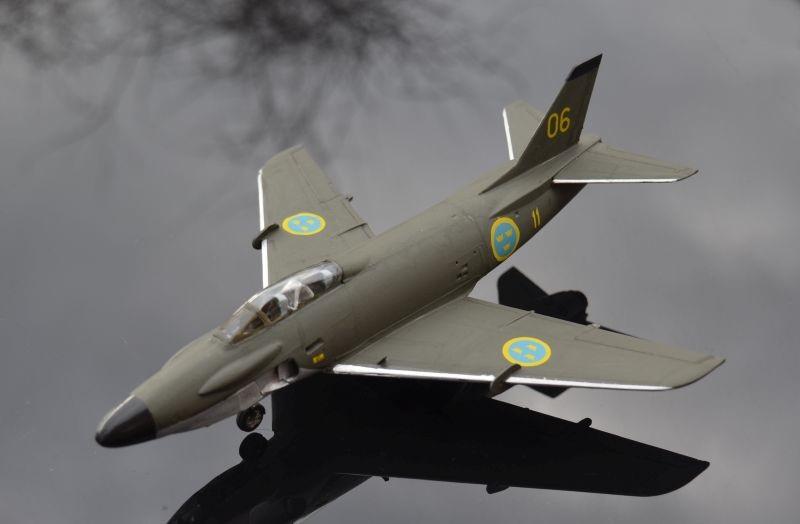
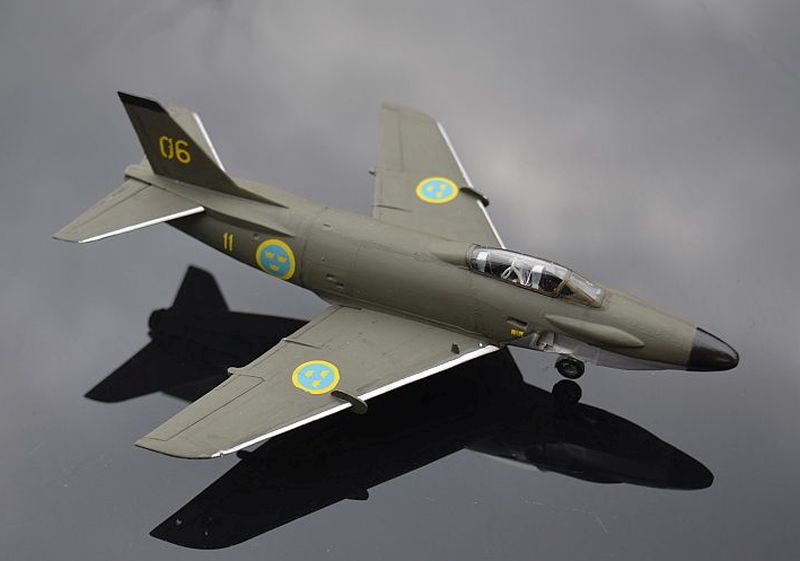
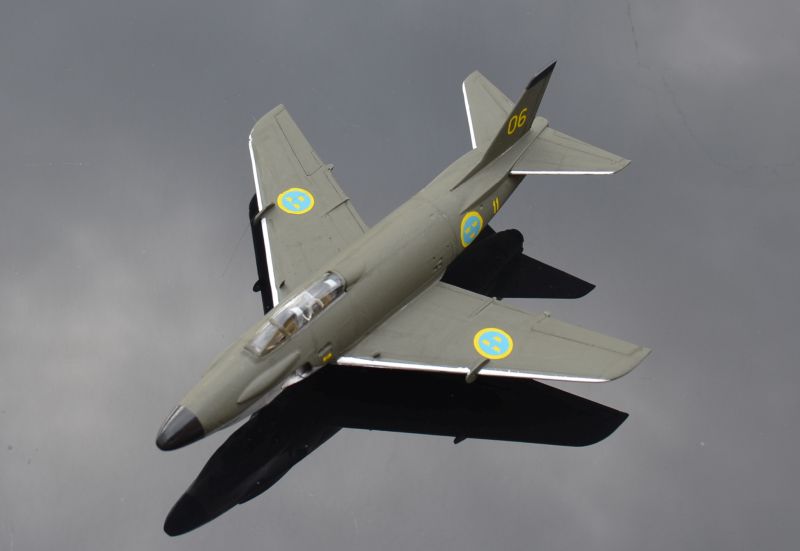
Heller 1/72

The Saab 32 Lansen (Lance) was a highly successful and advanced post WW2 Swedish
aircraft that entered service with the Flygvapnet in 1960, continuing in some specialised
roles until the 1990s. Its design drew heavily on WW2 Nazi research that was retrieved
by Sweden via Switzerland in 1945, specifically Messerschmitt's P11xx series of projects,
clearly reflected in some of its design features (even its original project name
-
The Saab design team included a brace of former Messerschmitt engineers, led by aerodynamic
designer Hermann Behrbohm who had worked with the Lippisch brothers on tailless delta
wings, on the Me-
Like many early jet designs, the Lansen was difficult to fly and suffered a high rate of attrition, with nearly 30% lost in accidents, resulting in the death of 100 crew and 7 civilians. One of its intended roles was as a Tactical Strike aircraft, with design closely linked to the Swedish Tactical Nuclear Weapons programme (which was eventually cancelled, with funds diverted to the J37 Viggen project).
Three main variants were produced: the original A-
Lansens were capable of supersonic flight in a shallow dive and were powered by a
licence-
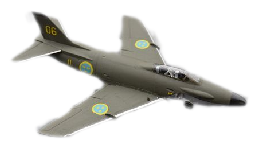
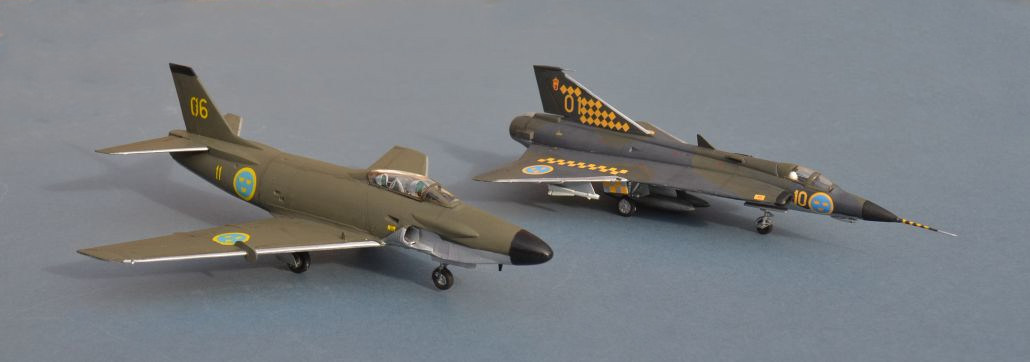
Building the Heller J-
The Heller Lansen first appeared in 1982 and whilst its finesse is far behind e.g.
some of ESCI's kits of the period, it is one of Heller's better kits, with excellent
parts fit, good parts breakdown and very fine raised panel lines. Based on its box,
I believe that mine is one of the early issues -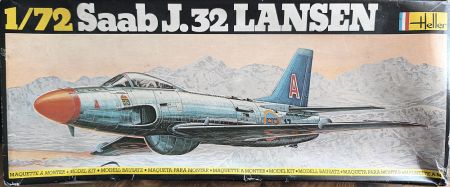
The cockpit is relatively bare but has instrument panels and side consoles with some
vague raised detail. The Saab Mk III ejector seats are very simplified but have
the correct basic shape -
Undercarriage and wheels are nicely detailed, but the wheel wells are smooth and undetailed. No weapon pylons or weapons are provided (even the Recce version carries pylons for flares) and most disappointingly, the distinctive under fuselage bulge (I believe this to be a fuel tank although some sources suggest it is a radar antenna) is not there although resin aftermarket ones (described as fuel tanks!) are still available.
I have an inherent distrust of Heller decals, having been tripped up badly by many Airfix kits from the period when their decals were produced by Heller and these ones did look as though they might be cracked, so to be on the safe side I coated them with a Micro Decal coat before using them. Given that they date from the early 1980s, it was no surprise that they were a little yellowed, and as I expected, they did crack apart once wet but were still salvageable.
The model is also a determined tail-
This is a good kit, typical late Heller, with a basic parts count and a little chunky by modern standards, but an easy and satisfying build of an important aircraft.
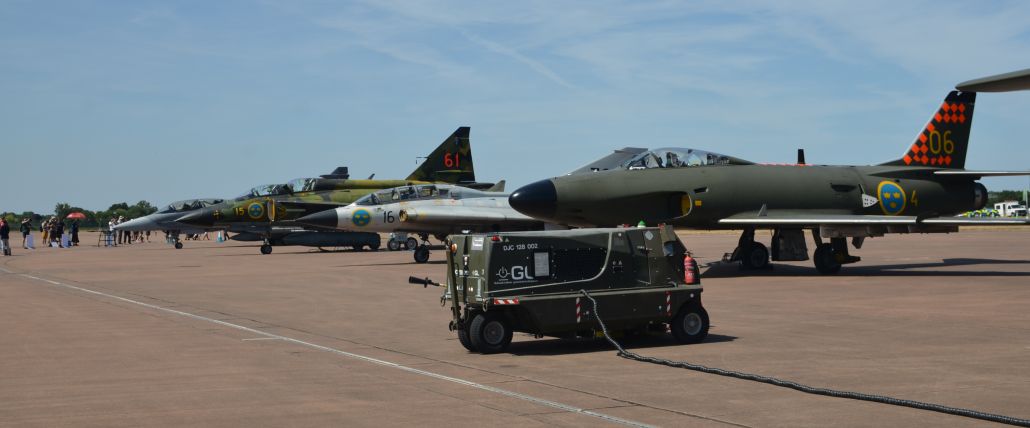
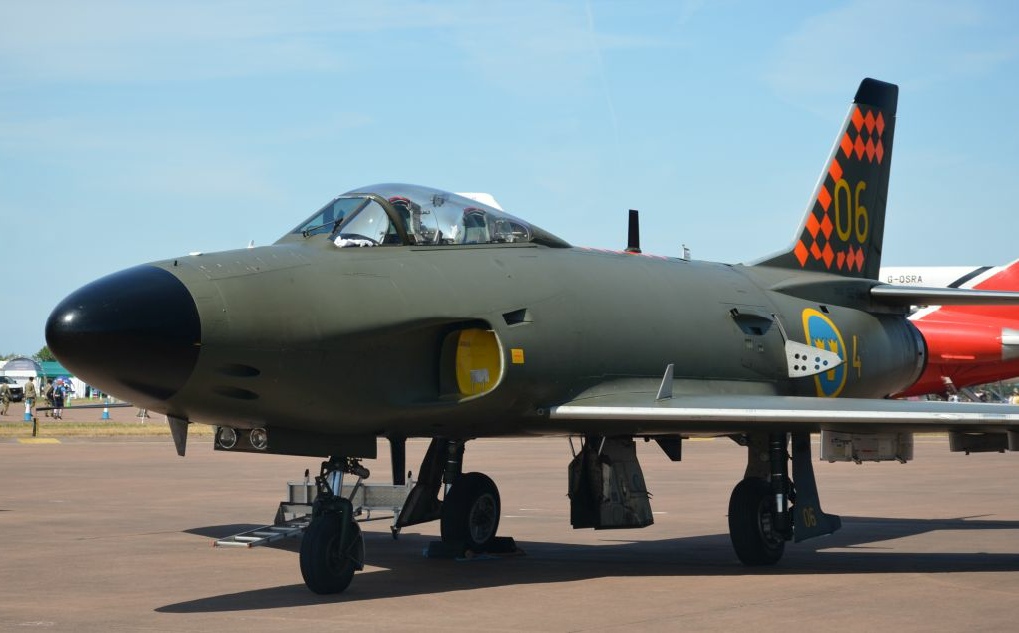
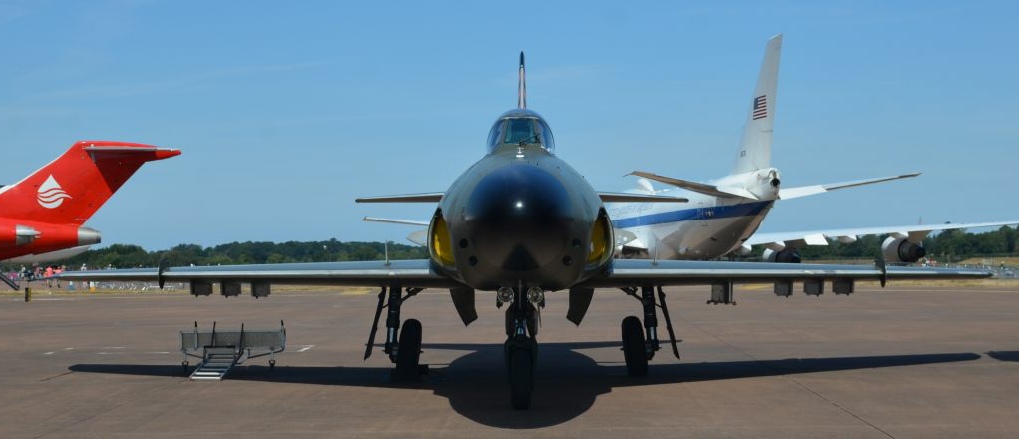
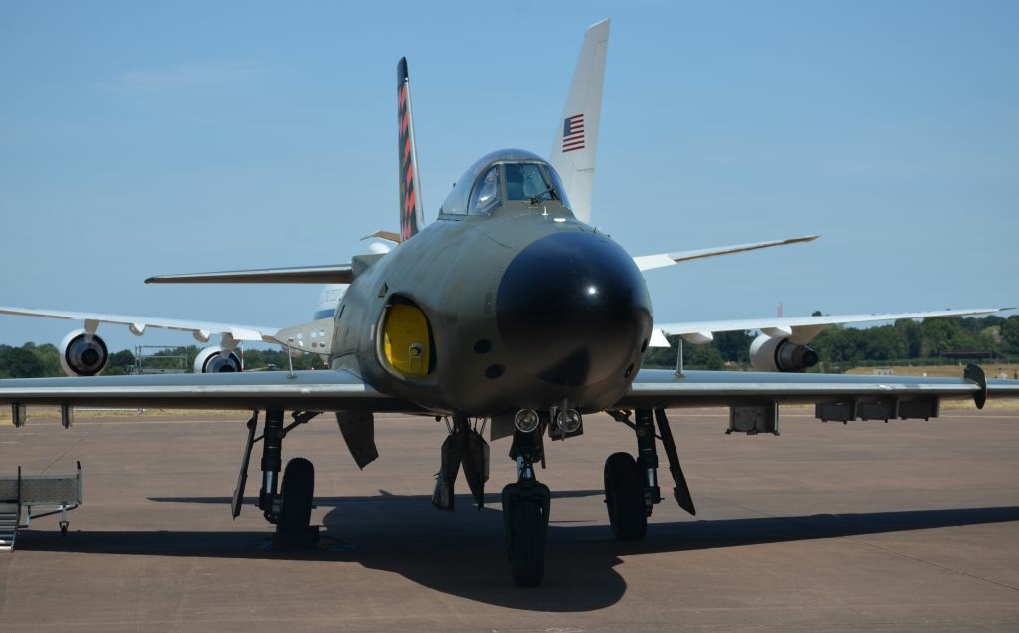
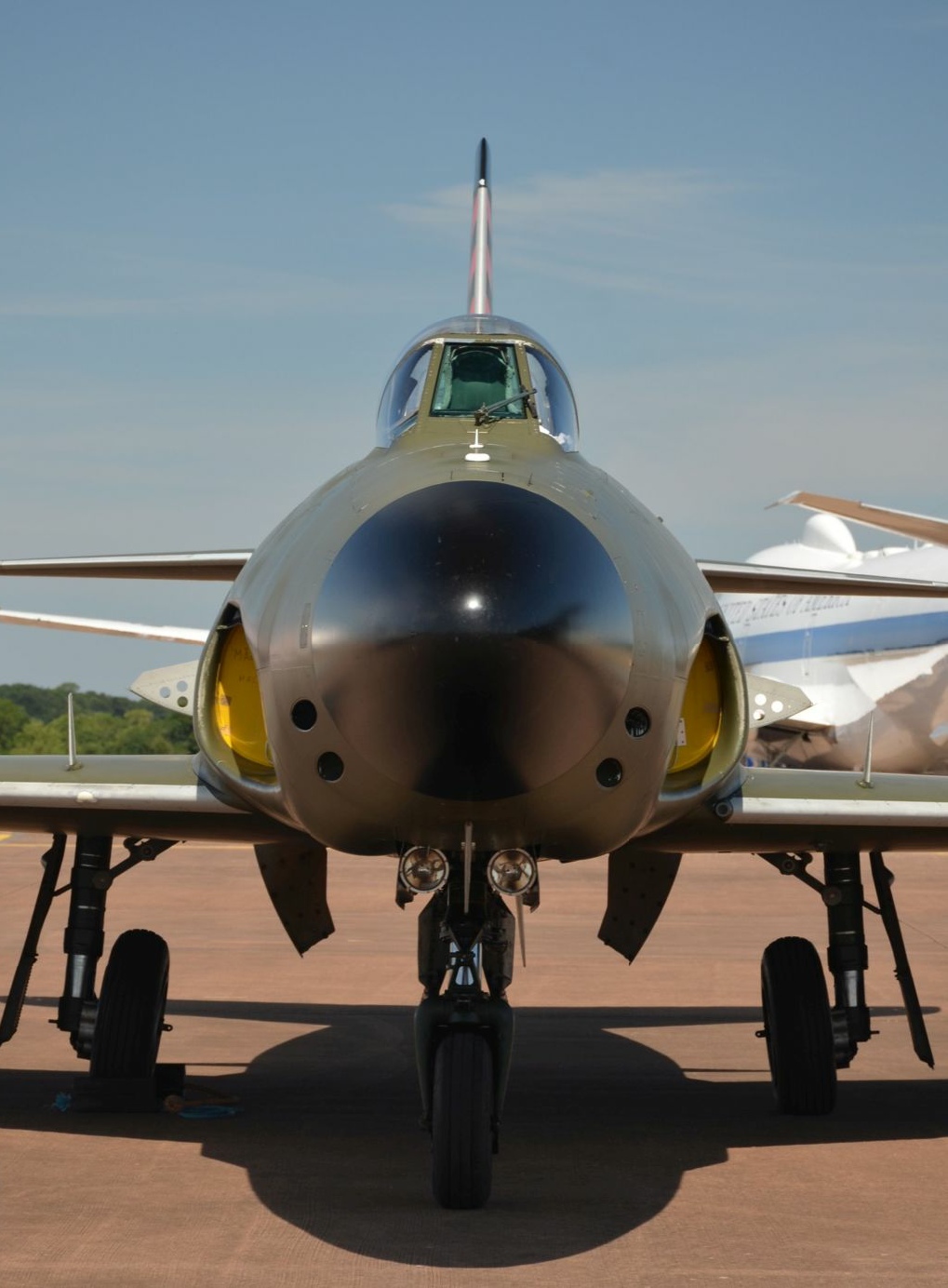
Below: The Swedish Air Force (Flygvapnet) maintain a historic flight of iconic jet aircraft, including the Viggen, Draken and Lansen. These photos show them at the 2022 RAF Fairford Royal International Air Tattoo (RIAT).
Link to Website Index: