April 2026 -
Saab J-
Link to Website Index: 
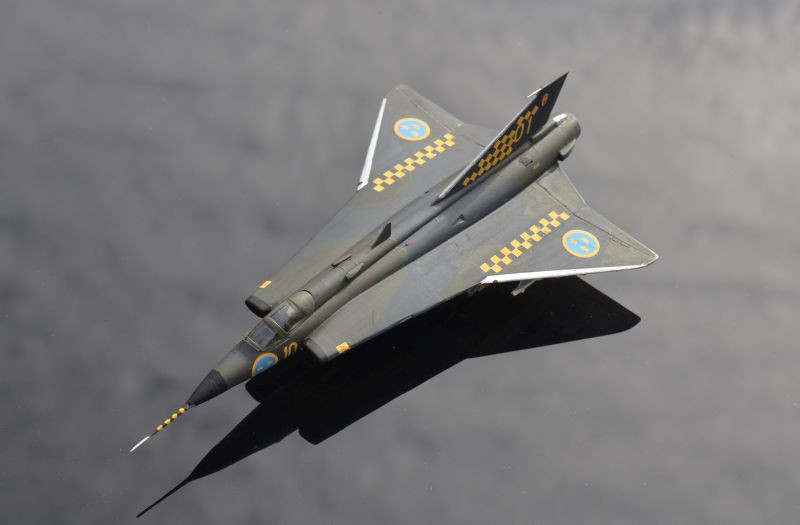
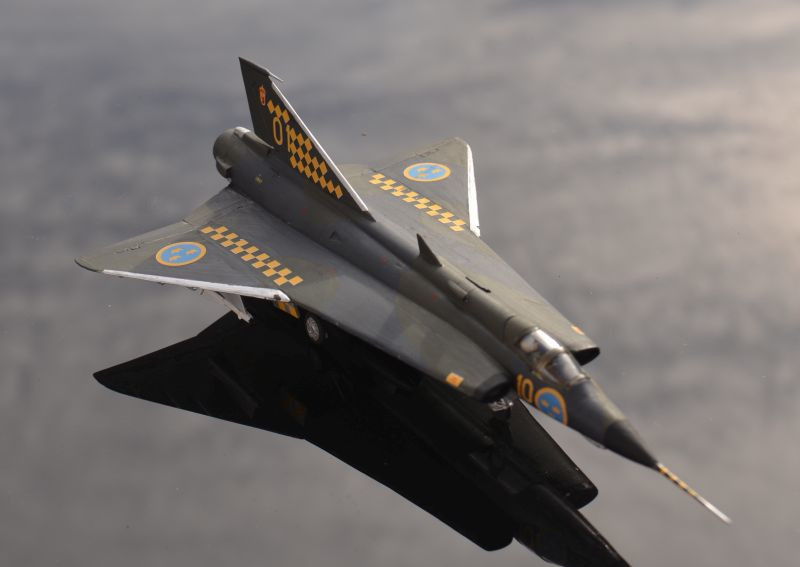
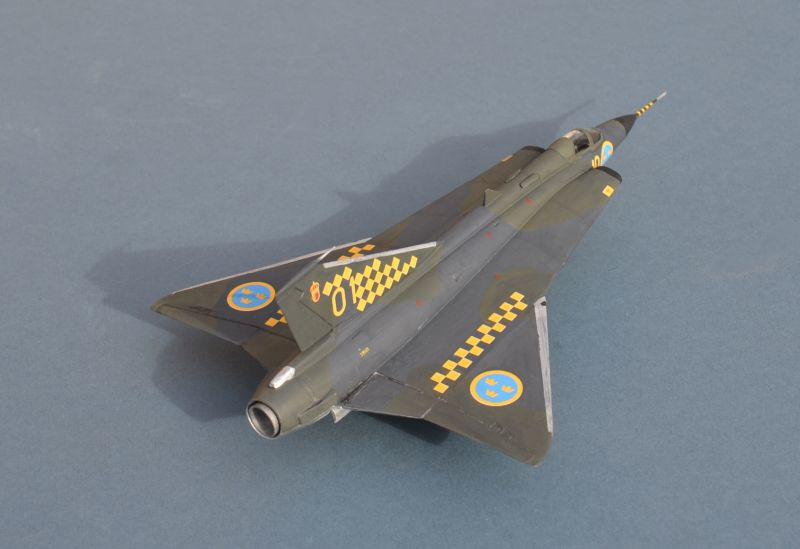
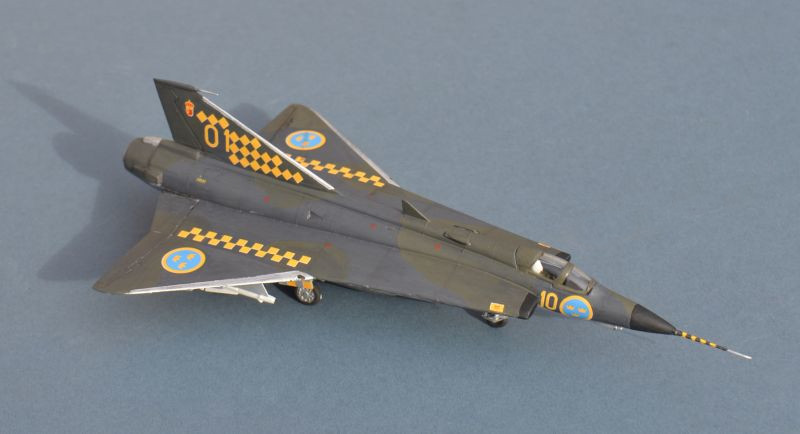
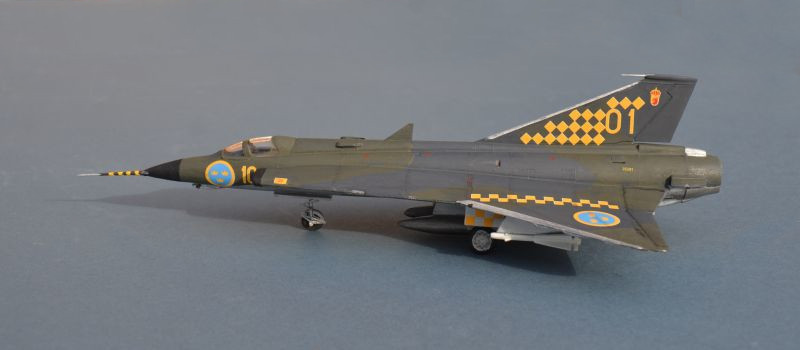
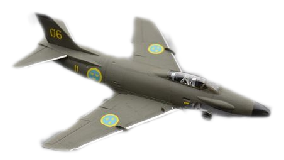
Saab J35 F2 Draken
Flygflottilj 10, Ängelholm Air Base, 1965
Airfix 1/72 with scratch decals

Link to Website Index:
The Saab J-
The Draken was designed as a very fast air defence interceptor, intended to face
high flying Soviet bombers as they crossed the Baltic sea. Its revolutionary double
delta wing was adopted to overcome CofG issues with a pure delta. Powered (like
the Lansen) by a locally built licensed Rolls Royce Avon (the RM6) fitted with a
Swedish-
Armament normally consisted of one or two 30mm Aden Canon (depending on variant),
unguided rockets and the Rb28/27 Falcon (AIM-
Drakens first entered service in 1959, with the last operational flight in 1999.
Building the Airfix Draken kit:
I knew that this was a basic "classic" kit when I bought it, but the primary decal
option and box-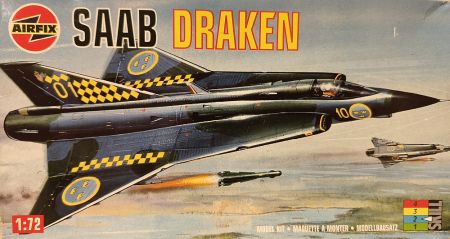
In fact, I had planned to use a Hobby 2000 issue of the Hasegawa kit with the Airfix
decals. Sadly, that kit has disappeared into the darker spaces of my garage and
I can't find it (my database helpfully tells me that it is "loose"), so off we go
with the1971 Airfix original, but in the form of a 1994 re-
The kit is typical of its age, with very little detail and prominent raised panel
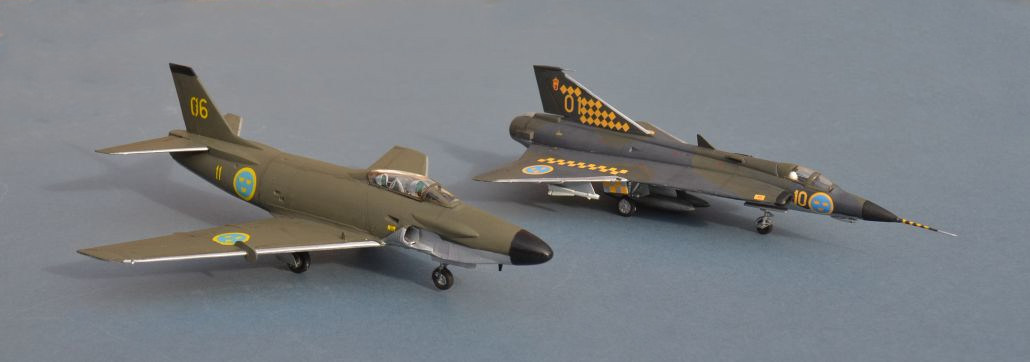
lines (drawing a poor comparison with my other build this month, the Heller Lansen)
and a cockpit with nothing more than a “single sofa” and a pilot. It also has some
of the quirks of this particular release era, which was one of Airfix's lowest points
-
That said, parts fit overall is not too bad (especially given the mould's age).
I sanded off the excessive raised panel lines as my reference pictures show a very
smooth skin. The soft plastic helped to remove blemished and misshapes and I plan
to restore some of the detail post-
One of the few benefits of this kit over the Hasegawa one is that it comes with some suitable armament, in the form of two variants (radar & IR) of the Hughes Falcon air to air missiles, as well as two centreline fuel tanks. The undernose IRST sensor is provided; I'm not sure this is relevant for both decal options, but I fitted it anyway! Paint is enamel, Humbrol 163 and Revell 74, with Humbrol 27001 and 27002 for the undersides & leading edges.
In summary, this is a kit only really suitable nowadays for nostalgia or blitz builds.
Nevertheless, it was fun to build as a compliment to my other build of the month
and the finished model turned out to be better than I expected, but trust me -
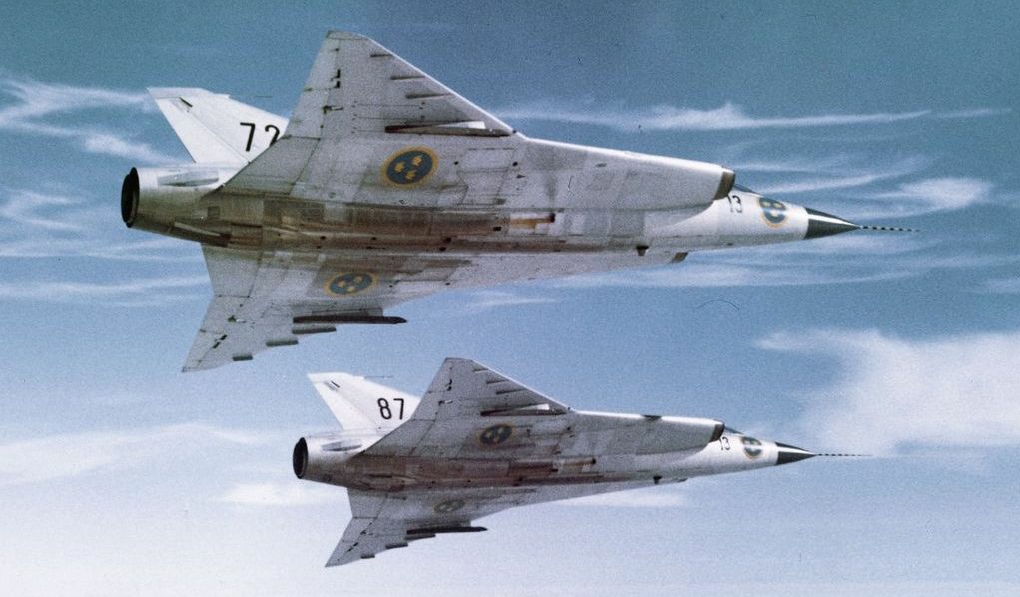
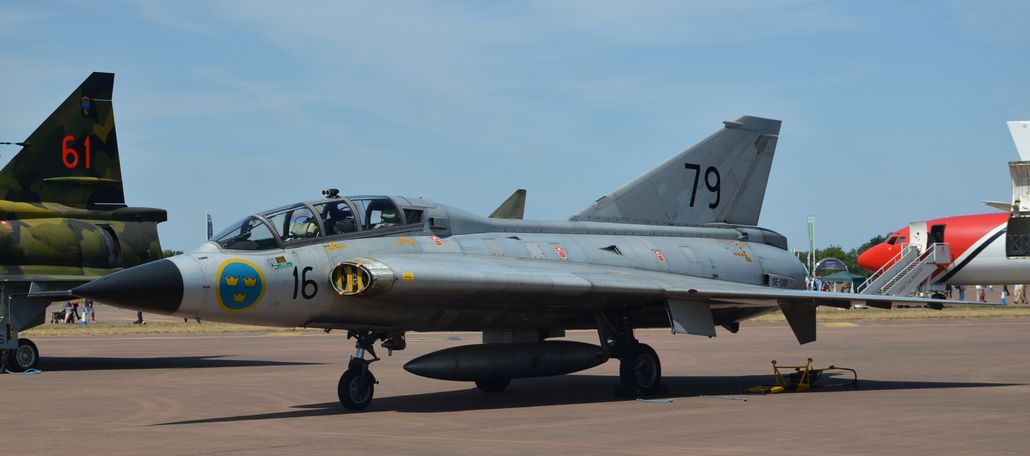
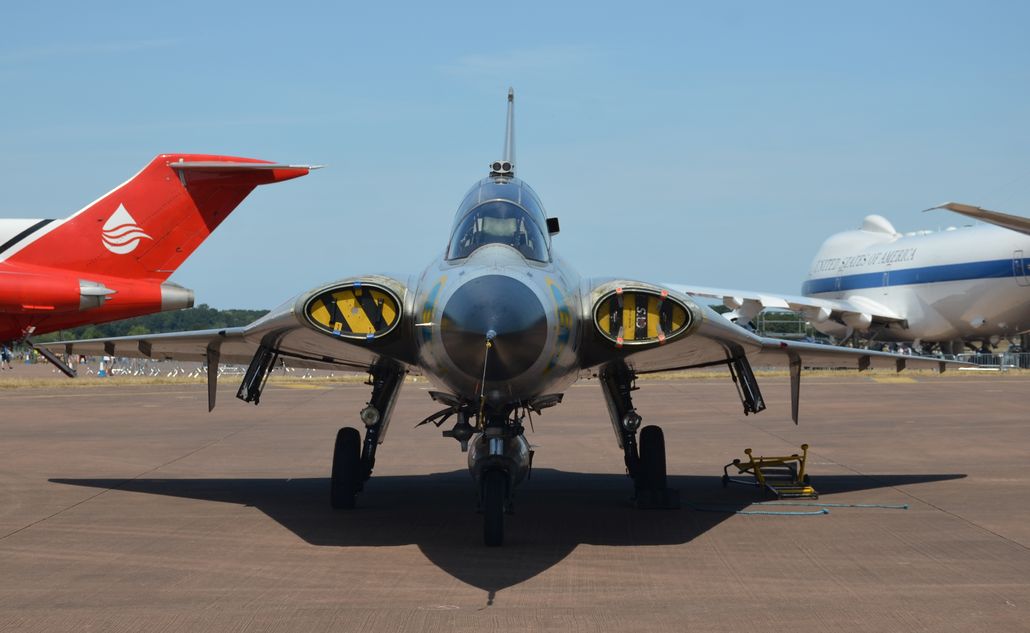
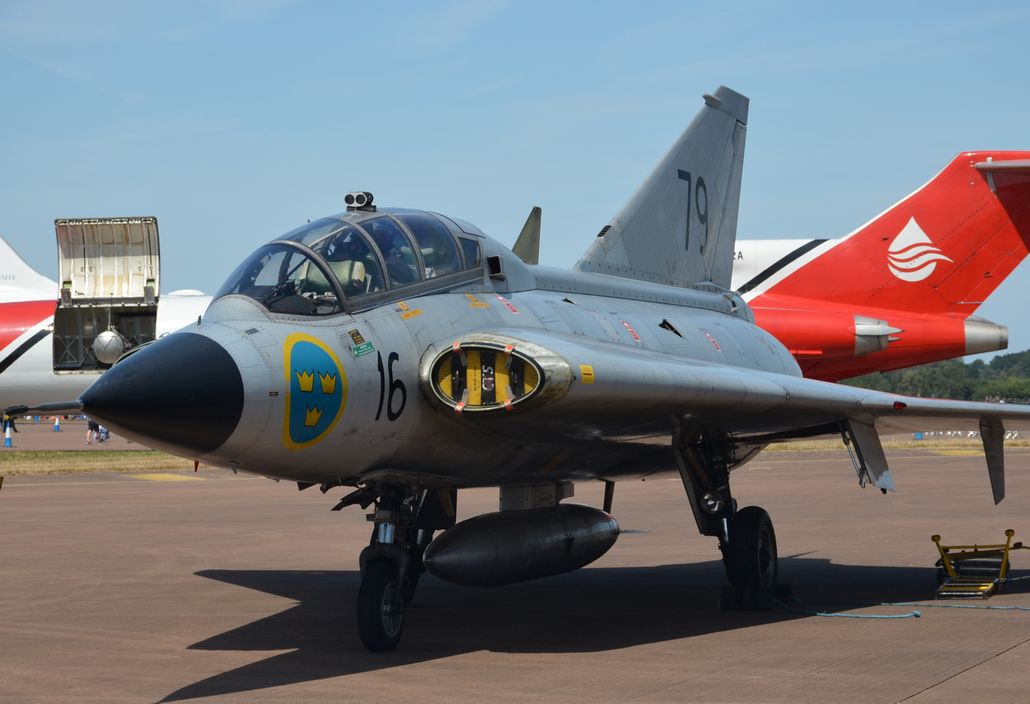
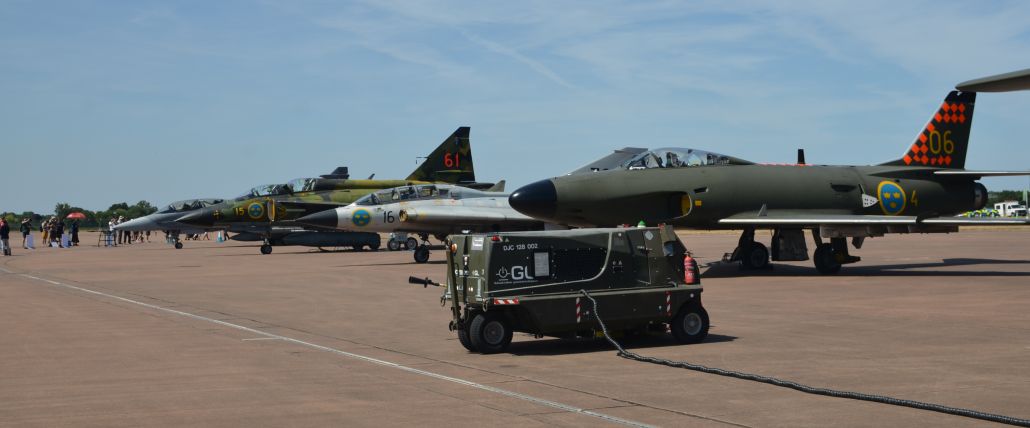
Below: The Swedish Air Force (Flygvapnet) maintain a historic flight of iconic jet aircraft, including the Viggen, Draken and Lansen.
The following photos show them at the 2022 RAF Fairford Royal International Air Tattoo (RIAT).
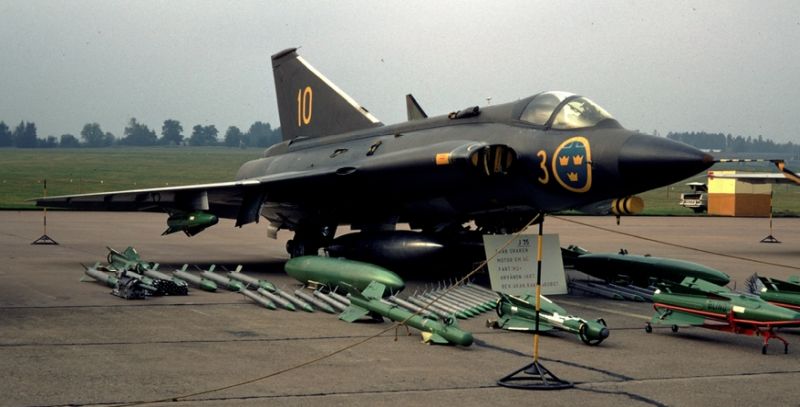
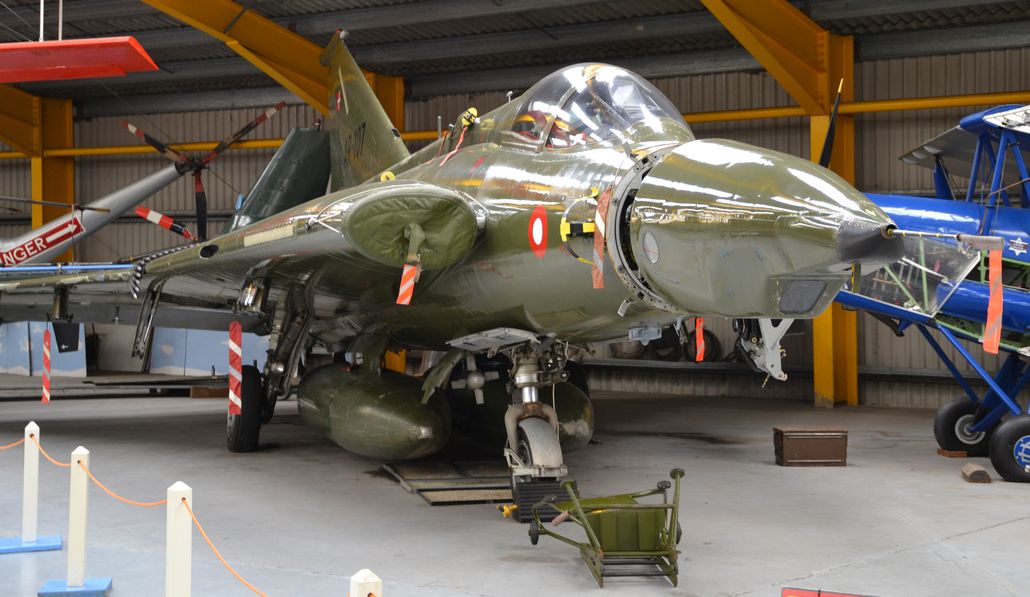
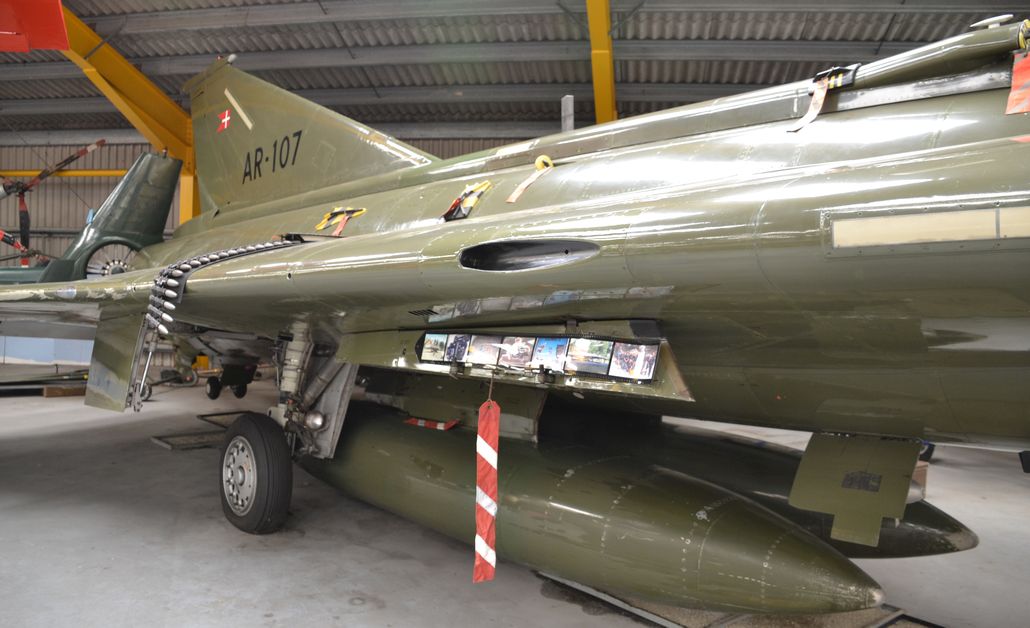
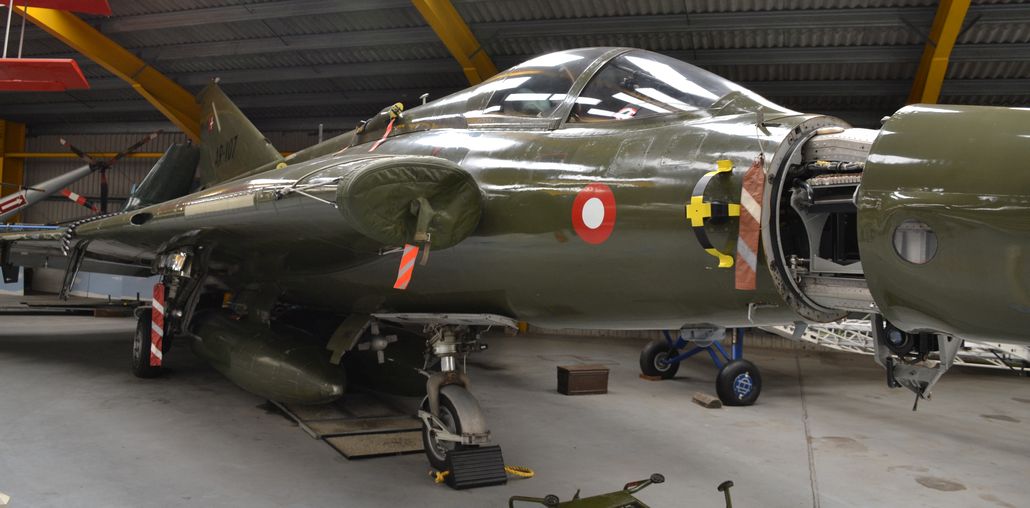
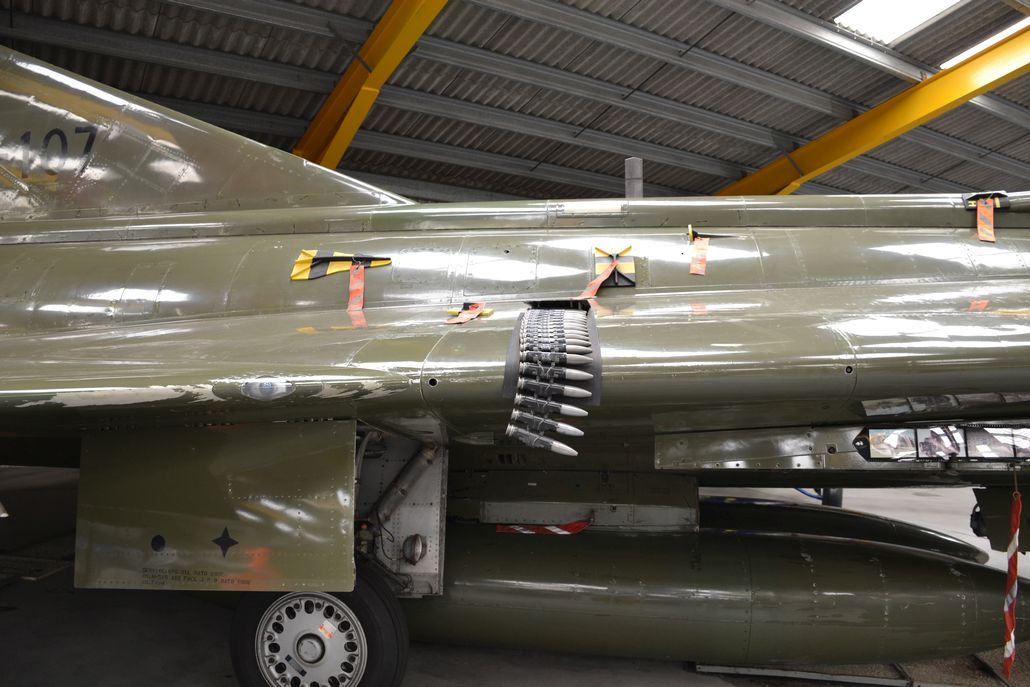
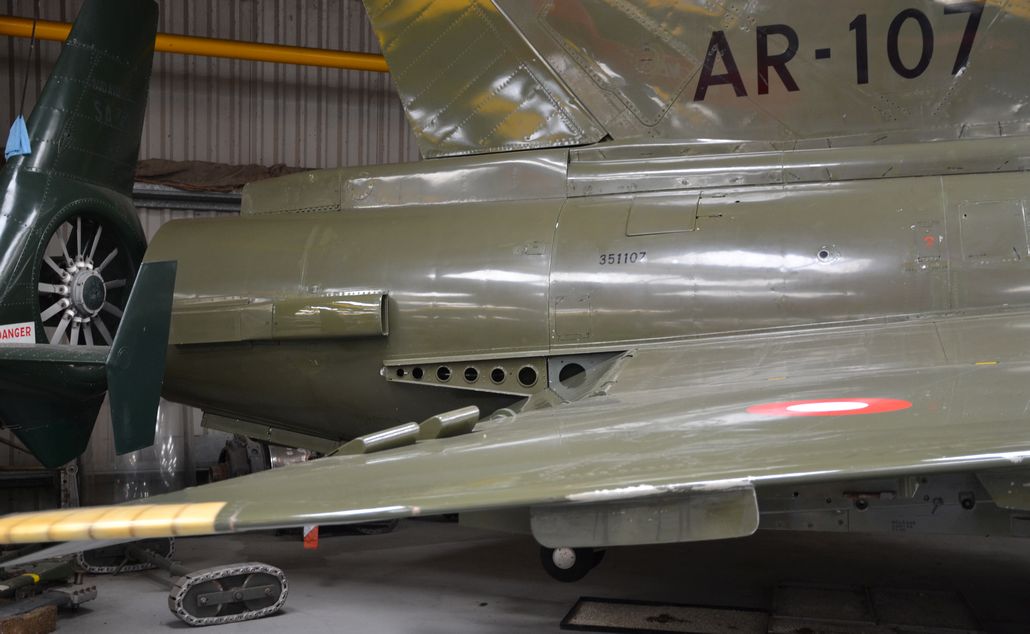
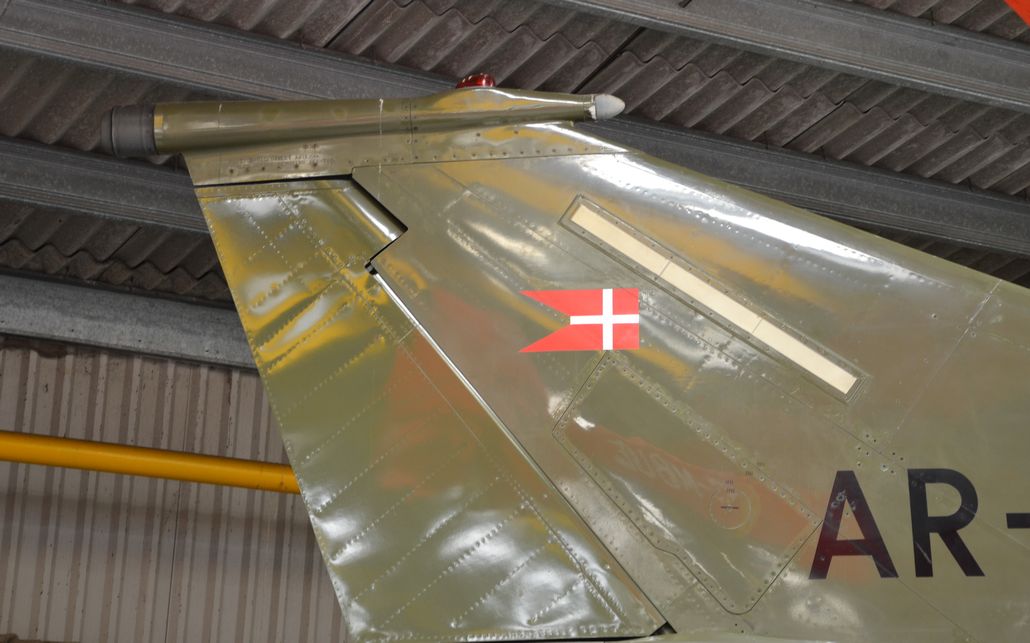
Below: Newark Air Museum in Lincolnshire has a prisitne ex-